For nearly 30 years, Maryann Wanjiru’s life in Nairobi had settled into a familiar rhythm. The 50-year-old mother of three spent much of her time between her home, the market and the small grocery business through which she earned a living. It was an ordinary routine, and for a long time, she had little reason to imagine that something serious might be happening to her health.
The signs did not arrive all at once. There was a cough that persisted, occasional fever, unusual tiredness, and a gradual loss of appetite. Some days she felt well enough to continue with her normal activities; on others, she did not feel quite herself. But life had to continue. There was a business to run, a family to care for, and everyday responsibilities that could not simply be put on hold.
Tuberculosis was not something she suspected.
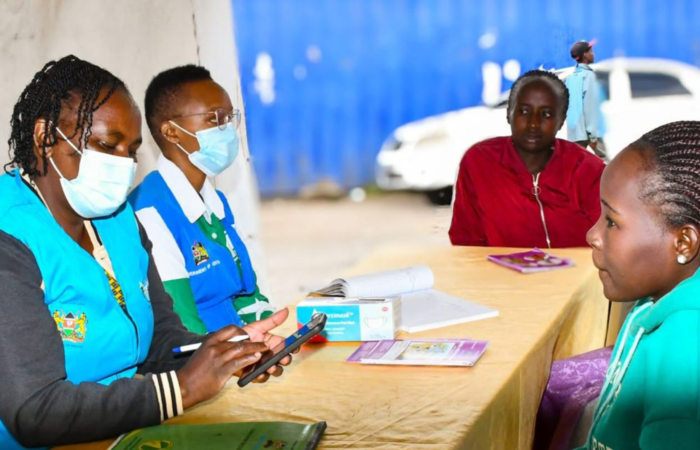
That changed when Maryann met Beatrice Adhiambo, a Community Health Promoter (CHP). During their interaction, Beatrice noticed Maryann’s symptoms and recognised that they needed further investigation. What could easily have remained another unexplained cough became the beginning of a very different journey.
Beatrice accompanied Maryann to Mathare North Level 4 Hospital for testing. The facility serves as one of the referral points used in PS Kenya’s community TB work, connecting people identified through community screening and contact tracing to diagnosis and treatment.
Then came the result Maryann had never expected: she had tuberculosis.
“Where did I get TB from?” she remembers wondering.
The diagnosis was difficult to process. As far as Maryann was concerned, her world was relatively small; her home, her business, the market and the familiar places that formed part of her everyday life. She struggled to understand how tuberculosis had entered that world.
Looking back, however, the symptoms that had seemed disconnected began to make sense. The loss of appetite, tiredness, recurring fever and persistent cough had been signs that something was wrong, even when she had still been able to carry on with her day.
Her experience reflects one of the challenges in identifying TB early: illness does not always announce itself in a way that immediately stops everyday life. People can continue working, caring for their families and managing their responsibilities while symptoms develop. Without awareness, screening and a connection to care, those symptoms can easily be overlooked.
For Maryann, that connection was Beatrice.
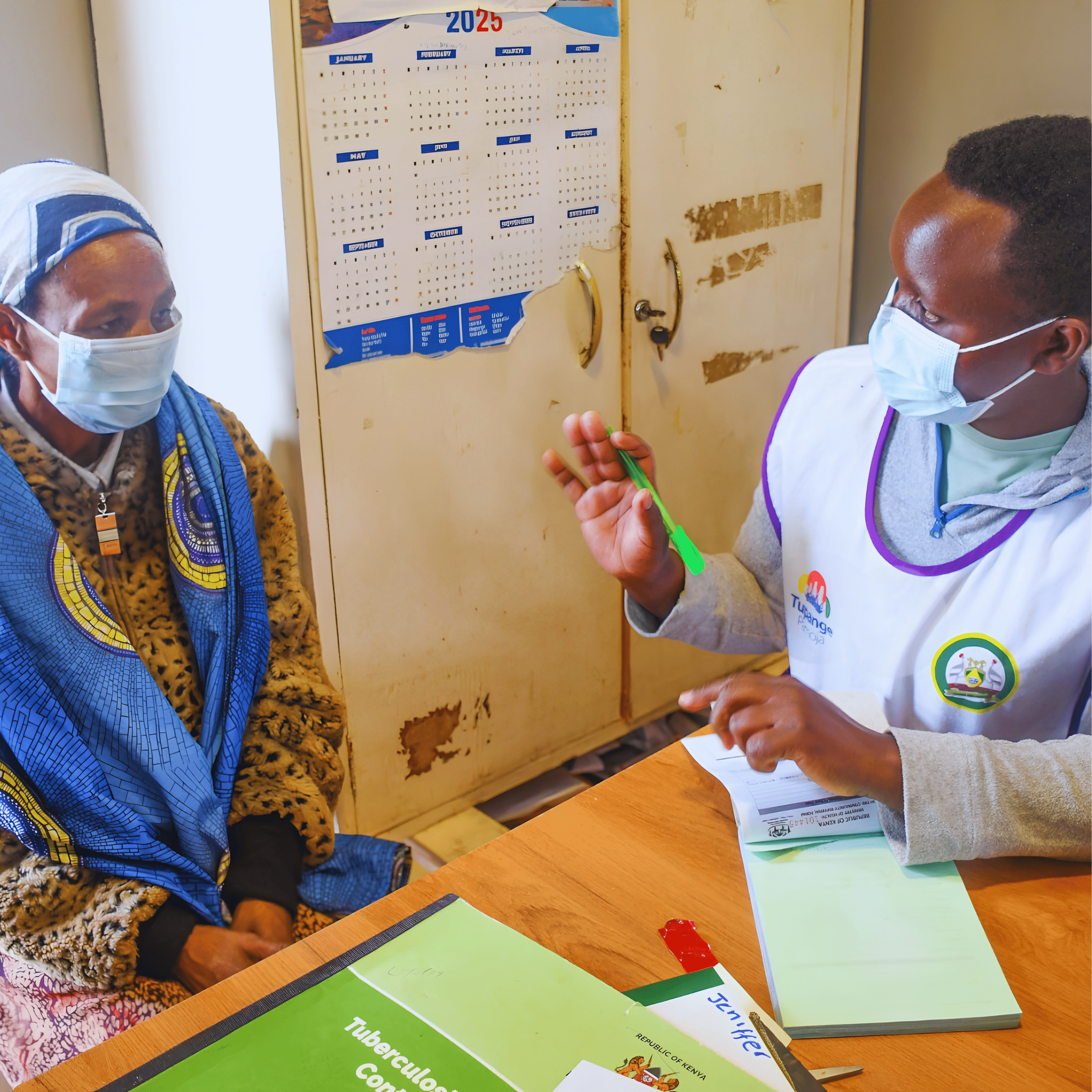
Beatrice is among the Community Health Promoters supported by PS Kenya to conduct TB awareness, screening, contact tracing and referrals. Her role did not end when Maryann reached the health facility. At a time when Maryann was coming to terms with an unexpected diagnosis, Beatrice encouraged her to begin treatment and continued following up with her throughout the journey.
The months that followed required commitment. Maryann had to take her medication every day and complete the full course of treatment, even as she began feeling stronger and returning to her normal activities. The regular follow-up and encouragement helped her stay on course.
“I took the drugs religiously, daily at 9 a.m.,” Maryann says.
That simple routine became part of her life for six months.
Today, Maryann has completed her treatment and is free from TB. But recovery, for her, means much more than completing medication. It means getting back to the parts of life that illness had slowly begun taking away.
Her energy has returned. She can run her grocery business again, care for her family and move through her day without the uncertainty that had begun surrounding her health.
“I am happy that I can go about my activities and continue doing my business well,” she says.
Having gone through the experience herself, Maryann now has a simple message for anyone diagnosed with TB: “Be faithful to your treatment. Take your medication every day until you finish.”
Her story is deeply personal, but it also illustrates the wider impact of bringing healthcare closer to communities. Someone living with TB symptoms may not know what those symptoms mean or may not immediately seek care at a health facility. A trained Community Health Promoter can become the critical connection between an unexplained illness and the healthcare system, recognizing possible symptoms, encouraging testing, facilitating referral, and supporting a person through treatment.
PS Kenya contributes to this effort as an implementing partner under the Global Fund-supported TB program, working alongside government, county health systems, healthcare providers and communities to expand access to quality TB prevention, diagnosis, care and treatment in Nairobi and Nyandarua counties. Community-based screening, contact tracing and referral are important parts of reaching people who might otherwise remain undiagnosed and connecting them to the care they need.
For Maryann, the impact of that system is not an abstract health outcome. It is being able to open her business again. It is having the energy to care for her family. It is waking up without the uncertainty that once surrounded her health. It is returning to the ordinary rhythm of life that, before her diagnosis, she may never have imagined could be at risk.
Her journey began with symptoms she did not fully understand and a diagnosis she never saw coming. But it also included a Community Health Promoter who recognised that something was wrong, a health facility that could provide diagnosis and treatment, and continued support that helped her complete the journey.
Today, Maryann is back where she wants to be, running her business, caring for her family and moving forward with her life. Sometimes, the most powerful measure of healthcare impact is exactly that: helping someone regain the health, independence, and everyday life that illness had begun to take away.