For a young person searching for a way forward, learning a new skill can be the beginning of hope. But a certificate does not automatically bring a customer, a job, or the equipment needed to start a business. Across Kenya, the gap between training and earning can leave capable young people uncertain about what comes next.
This is not a question of ambition. Many young people are ready to work and eager to contribute to their families. What they lack may be a first opportunity to practise a skill, access to markets, mentorship or the confidence that comes from completing work for a real customer. If training is meant to support economic independence, the test cannot end on graduation day.
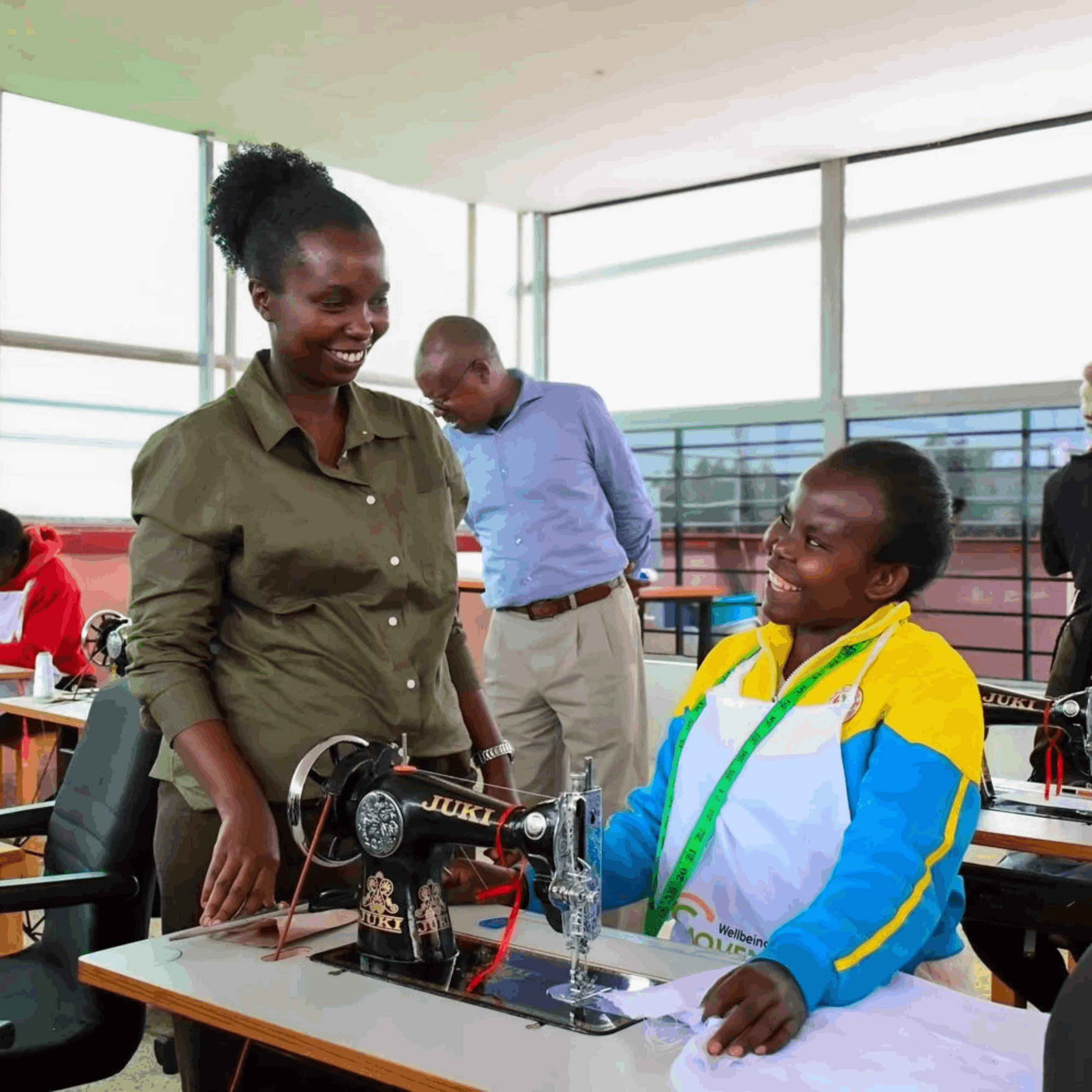
For Neema, a young mother originally from Meru, the path towards an income had not been straightforward. Financial difficulties interrupted her education. After moving to Nairobi, she worked as a domestic worker and later tried selling vegetables, but building a stable livelihood remained difficult. She heard about the WellBeing Youth Enterprise Movement through community workers while participating in Kazi Mtaani and was drawn by the possibility of learning tailoring and, one day, running her own business.
When she joined, Neema did not know how to operate a sewing machine. Learning took patience and repeated attempts. “The trainer was patient with me and helped me learn despite failing many times,” she recalled. She now speaks with growing confidence about making quality clothes and eventually opening a tailoring business. That business remains an ambition, not an achieved outcome—but the change in her skills and confidence is already meaningful.
Her experience illustrates why practical learning matters. Technical skills are important, but so are time management, goal-setting, understanding quality and learning how to work towards a customer’s expectations. Neema has described how the sessions helped her organise her days and remain focused on her goals while balancing responsibilities at home.
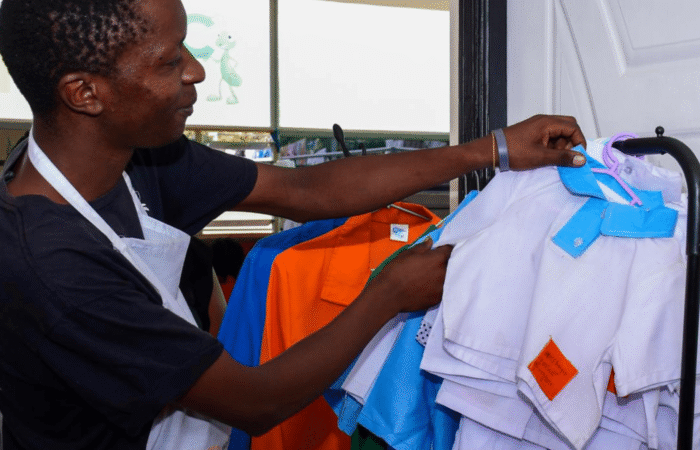
PS Kenya’s WellBeing Youth Enterprise Movement is designed around that broader understanding. At the WellBeing Centre, vocational training is connected with business and life skills, health education, mental wellbeing support and opportunities for practical production. Textile work offers a useful starting point because products such as uniforms and workwear have recurring demand. The intention is to connect learning to real market opportunities rather than treating training as an end in itself.
This approach also requires partners. Businesses can offer orders, market insight and exposure to workplace standards. Mentors can help young people navigate the uncertainty of starting out. Community organisations and development partners can support the conditions that make participation possible. Sustainable livelihoods cannot be created by training providers or young people working alone.
For donors and partners, the opportunity is to invest not only in skills delivered, but in the pathways that follow: practical experience, market access, enterprise readiness and the support that helps young people persist. The outcomes should be assessed carefully, distinguishing emerging confidence and capabilities from income or employment results that are still to come.
Neema’s story is still unfolding. That is precisely why it matters. Her journey reminds us that youth empowerment is not simply the moment someone learns to use a machine; it is the possibility that the skill, with the right support and opportunity, can become a livelihood. The measure of success is not only what young people learn, but what they are eventually able to do with it.