

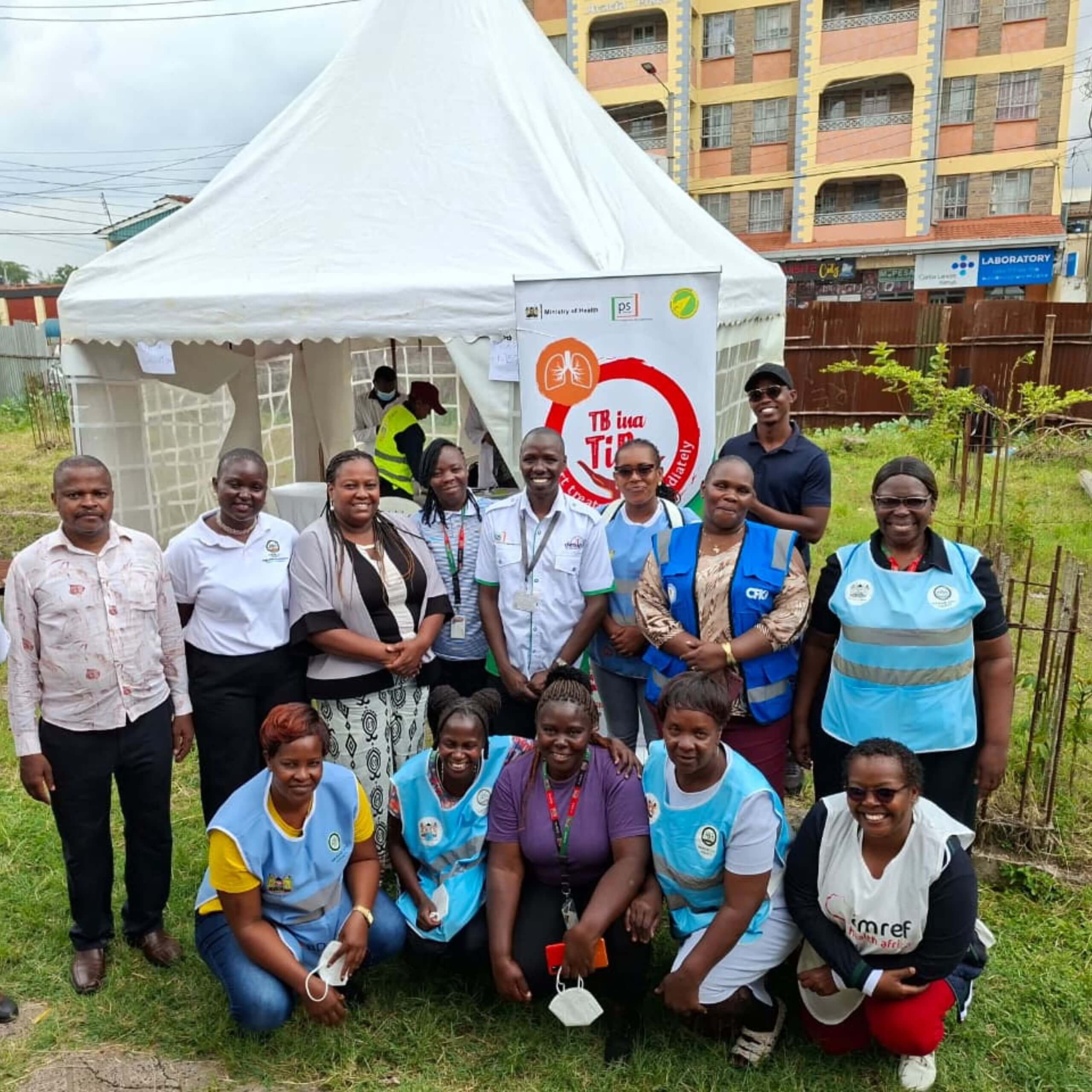
Tuberculosis (TB) remains one of the world’s deadliest infectious diseases, yet it is preventable, treatable, and curable. And still, every year, millions of people are missed, undiagnosed, untreated, or reached too late. Not because solutions do not exist, but because systems are not always designed to reach people where TB actually begins. Because TB does not start in hospitals. It starts in homes.
World TB Day is often marked by awareness. However, awareness alone will not end TB. What is needed is a shift in how services are delivered, from facility-based models to approaches that are community-led, people-centered, and responsive in real time. At PS Kenya, this shift is already underway.
In 2025, through our TB program funded by the Global Fund and aligned with the national response, we:
- Reached over 2,300 individuals through household contact tracing, identifying cases early within communities
- Strengthened community-led monitoring systems, improving accountability and responsiveness in TB care
- Expanded school-based awareness, equipping learners and educators with critical information
- Enhanced case detection through symptom screening, X-rays, and laboratory diagnostics
- Supported psychosocial care, improving treatment adherence and reducing stigma
These are not just outputs. They represent how systems begin to work differently and better for people.
- Early detection at the household level interrupts transmission before it spreads further.
- Community-led monitoring ensures that care is not only delivered, but delivered effectively.
- School engagement builds awareness early, shaping long-term health-seeking behavior.
- Psychosocial support addresses one of the most persistent barriers to TB care, stigma.
Together, these approaches shift TB response from reactive to proactive, preventive, and people-centered. Ending TB is not a question of possibility. It is a question of priority and investment.
What works is increasingly clear:
- Decentralized, community-based service delivery
- Stronger health systems that integrate detection, treatment, and support
- Innovation in diagnostics to reduce delays in care
- Addressing the social and economic drivers of vulnerability
However, these solutions do not scale on intent alone. They require sustained, intentional investment, not just in commodities or campaigns, but in systems that deliver consistently, equitably, and at scale.
This year’s World TB Day theme, “Yes, we can end TB: Led by countries, powered by people”, is not aspirational. It is operational. Countries must lead with policy, coordination, and accountability. But progress will ultimately be driven by people, communities, frontline workers, and systems that meet them where they are. Ending TB will not come from doing more of the same. It will come from reimagining how care is delivered, bringing services closer, detecting cases earlier, and supporting people across the full continuum of care.
This is what it takes to end TB. And this is the work we are delivering.

