Please ensure Javascript is enabled for purposes of website accessibility

When Safe Water Is Still Out of Reach

For a family relying on an open, turbid water source for drinking, the journey to safer water doesn’t end at collection; what happens next can determine whether that water remains a source of life or becomes a pathway to disease.

Floods and droughts disrupt water systems and contaminate sources. Unsafe water can rapidly escalate into public health emergencies. Safe water prevents avoidable illness and death. Drought leads to unsafe coping strategies – reliance on unsafe water sources – Long distances travelled to access water – Use of untreated surface water and livestock water points – Reduced water use undermines hygiene practices. Unsafe water causes repeated diarrhea – Diarrhea contributes to malnutrition and weakened immunity – Children facing drought endure hunger and unsafe water.

In parts of Narok and Kajiado, some households continue to rely on contaminated open water sources, leaving them particularly vulnerable when drought, floods and disease outbreaks disrupt access to safe water. For these families, safe water is not simply a matter of having a source nearby. It is about having the knowledge, supplies and practical support to make the water they collect safer for drinking at home.

This is the gap Population Services Kenya (PS Kenya), in collaboration with the Narok and Kajiado Counties’Public Health Departments, is working to address through its WASH emergency project. Rather than focusing only on where water comes from, the intervention takes the solution to the point where water is ultimately consumed: the household.
Funded by Procter & Gamble, the project adopts an approach that focuses on point-of-use water treatment, helping households manage drinking water more safely after collection through targeted behavior change risk communication models. But reaching households across dispersed communities requires more than distributing water treatment supplies. It requires people who understand the communities, know the challenges families face, and can translate information into practical action.
That is where Community Health Promoters (CHPs) come in.
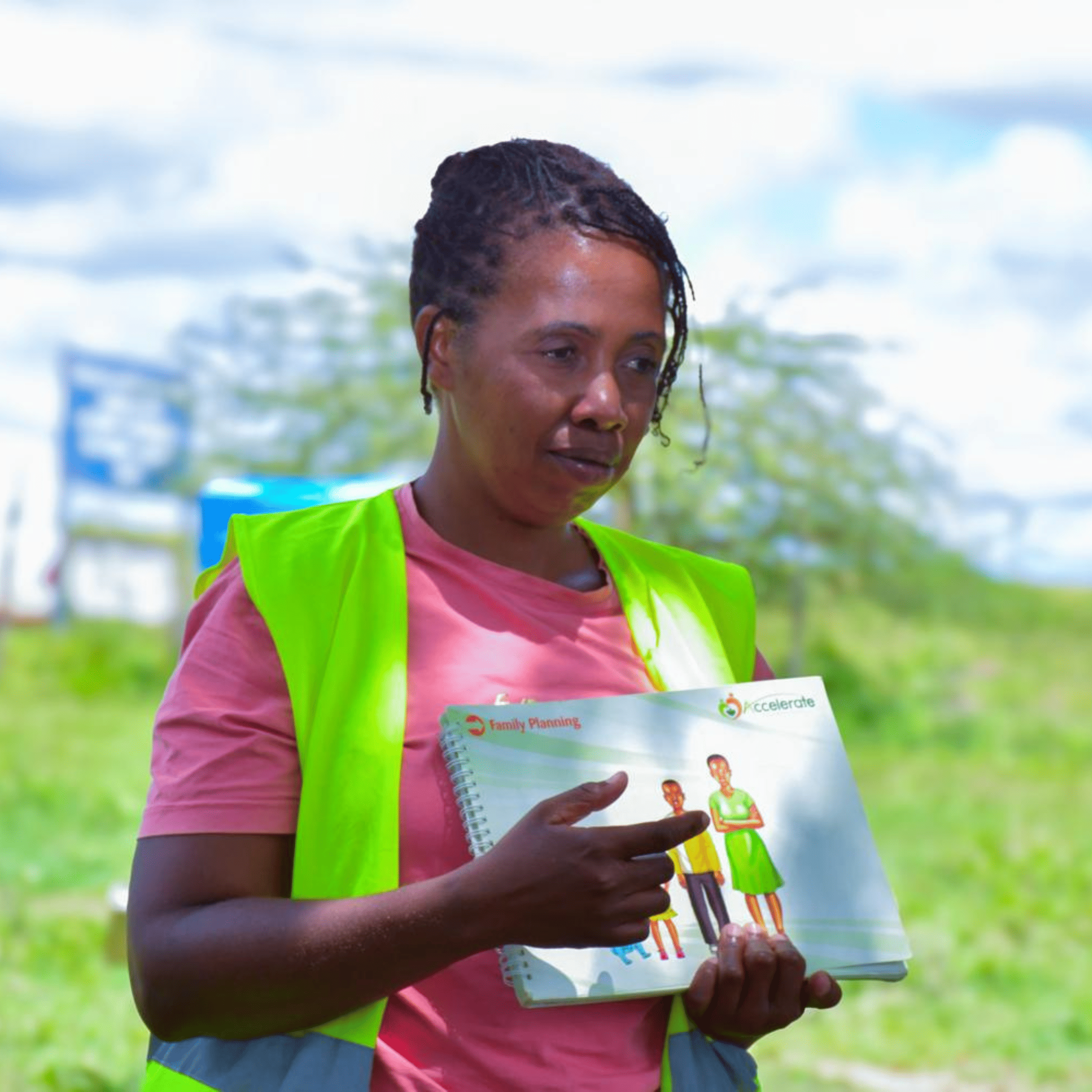
Through the project, CHPs are being equipped with skills in safe water systems, household water treatment and management, alongside social and behaviour change approaches. They become an important link between the health system and households, helping take safe water practices beyond health facilities and into the places where families make everyday decisions about drinking water.
So far, 180 Community Health Promoters in Narok South, Narok East and Kajiado West sub-counties have been reached through safe water systems capacity-building training. The training has laid the groundwork for household-level engagement, giving CHPs the knowledge needed to support communities in adopting safer water treatment and management practices.
The project identified and enrolled 15 healthcare facilities as entry and distribution points for water purification supplies, leveraging the existing community health strategy. This creates a link between the health system, community health workforce, and households, making it possible for safe water interventions to move closer to the people who need them.
The significance of this approach lies in its last-mile focus. A water treatment solution has limited value if families do not know how to use it, cannot access it, or do not understand why it matters. By strengthening the people who work closest to communities, the intervention is building the capacity to turn knowledge into household practice.
For PS Kenya and its partners, this is what moving from an emergency response to community resilience can begin to look like. The goal is not simply to respond when floods, drought or disease outbreaks occur, but to strengthen the knowledge and systems communities can draw on to protect their health when those shocks arise.
The  180  CHPs trained are therefore more than a programme statistic. They represent a growing network of community-level health workers equipped to take safe water messages and practices closer to households. Their training lays the foundation for conversations that can influence how families treat, store, and manage the water they drink.
And that is where the impact of safe water work ultimately lives: not in the training room, but in the household where a family makes the decision to treat its drinking water, in the community where safer practices become routine, and in the resilience built before the next drought, flood, or disease outbreak arrives.
Because safe water should not depend on how far a household is from a solution. It should reach the last mile, and it should begin at home.