When Naisula Lenkai went into labour with one of her children, she never imagined she would nearly lose her life. After giving birth at home, severe bleeding left her weak and frightened. By the time she reached a health facility, it was almost too late.
“Kuna wakati nlipata matatizo wakati wa kujifungua nyumbani, wakati nilifika hospitali nilikuwa nimechoka sana,” she recalls. (“There was a time I experienced complications while giving birth at home. By the time I reached the hospital, I was very weak.”) For years, Naisula followed traditions that were common in her community. In her village, many women gave birth at home, attended antenatal care (ANC) late, or not at all, and avoided ultrasound scans due to long-held cultural beliefs. “Kwa mila yetu hufai kuona mtoto tumboni, wanaamini ni vibaya unaweza poteza ujauzito,” she explains. (“There is a belief that you should not see the child in the womb because it may cause the pregnancy to be lost.”)
Naisula’s experience reflects the reality that many women in Samburu face. Distance, cultural practices, and limited access to skilled care can delay antenatal visits and facility deliveries, increasing the risk of complications for both mothers and babies.
The Accelerate Program, funded by the Embassy of Denmark, is working with county health systems, healthcare providers, and community organizations to improve access to maternal health services, antenatal care, skilled birth attendance, facility delivery, and postpartum family planning across Samburu County.
Everything began to change when Naisula attended a community dialogue session organized through the Accelerate Program. During the session, facilitators from local community-based organizations discussed the importance of antenatal care, skilled birth attendance, ultrasound services, pregnancy care, and birth preparedness. “Nilisikia kwa mara ya kwanza kuenda clinic ni muhimu na kufanya scan ni salama,” she says. (“I heard for the first time that going to the clinic is important and that ultrasound is safe.”)
The change was not hers alone. Her husband also attended a male engagement session where men discussed pregnancy, childbirth, and the role they play in supporting their partners. The conversations challenged common misconceptions and encouraged men to become active participants in maternal health.
In many households, decisions about maternal health, pregnancy care, and where women seek care are influenced by husbands and other family members. Engaging men helps improve birth preparedness and support for maternal health services.
“Mume wangu alisema tutakwenda hospitali,” Naisula says with a smile. (“My husband said, ‘We will go to the hospital.'”)
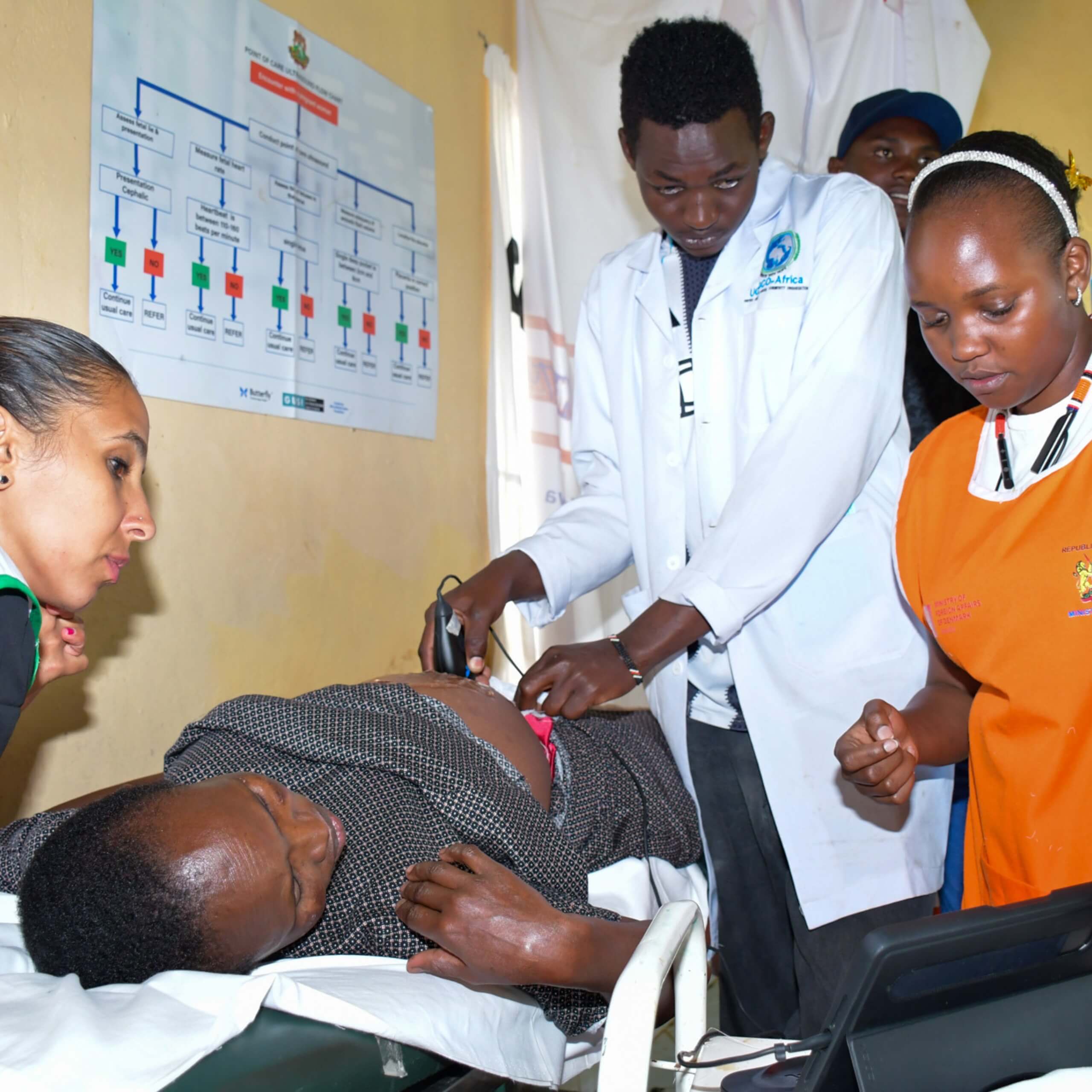
Today, Naisula is attending antenatal care and preparing for a facility-based delivery. During one of her ANC visits, a trained healthcare provider conducted a Point-of-Care Ultrasound (PoCUS) scan and confirmed that her pregnancy was progressing well.
“Nilifurahi kuona mtoto wangu tumboni na walinieleza kuwa yupo mzima,” she says. (“I was happy to see my unborn child and to be told the baby was healthy.”) She also received counselling on postpartum family planning to help her plan and space future pregnancies. “Daktari walitufunza vizuri na alinipendekeza nipate njia ya kupanga uzazi baada ya kujifungua ili nilee watoto wangu vizuri,” she says. (“The doctor advised me to get a family planning method after delivery so that I can care for my children well.”)
For county health officials, stories like Naisula’s demonstrate the importance of addressing both cultural and health system barriers. “Before, many women gave birth at home with traditional birth attendants,” says Katra Lelesit, Samburu County Reproductive Health Coordinator. “We have been working hard to change that.”
The county has increasingly engaged traditional birth attendants as birth companions and referral champions, encouraging them to accompany pregnant women to health facilities rather than conducting home deliveries. “Tuna wajibu wa kumweka mwanamke salama hadi hospitali,” she says. (“We have a duty to keep women safe until they reach the hospital.”)
Community dialogues and local radio programs have become powerful platforms for promoting maternal and newborn health, addressing harmful myths, and improving access to reproductive health information. “Kuna imani nyingi za jadi zinazopelekea watu kujifungua nyumbani,” she explains. (“There are many traditional beliefs that lead people to give birth at home.”)
These conversations help communities make more informed decisions about antenatal care, facility delivery, and family planning.
At the health facility level, providers trained through the Accelerate Program report increased confidence in identifying and managing maternal and newborn health risks. “Before training, we referred women long distances for ultrasound scans or relied on estimates,” says David Laparie, a healthcare provider who received on-the-job training in Point-of-Care Ultrasound. “Now we can perform scans during ANC visits and identify potential risks earlier.”
Early detection of complications allows providers to make timely referrals and improve birth preparedness before emergencies occur.
The introduction of PoCUS has also helped build trust between healthcare workers and pregnant women. “When women see their babies during the scan and understand what is happening in their pregnancy, they become more confident and more likely to continue attending ANC visits,” Laparie explains. He also notes the growing involvement of men in maternal health. “We encourage partners to accompany their wives to ANC. When couples come together, we provide counselling on birth preparedness and family planning before discharge. This helps women space pregnancies and reduces risks in future pregnancies.”
By combining community-led social and behaviour change communication (SBCC), male engagement, provider capacity strengthening, Point-of-Care Ultrasound (PoCUS) training, postpartum family planning services, stronger community-health facility linkages, and collaboration with county governments, healthcare providers, community-based organizations, and the private sector, PS Kenya, through the Accelerate Program, is strengthening maternal health and reproductive health systems while supporting progress toward the Three Zeros: zero preventable maternal deaths, zero unmet need for contraception, and zero gender-based violence.
Today, Naisula approaches motherhood with confidence rather than fear. She understands the importance of antenatal care, trusts the health system, and plans to deliver at a health facility.
Her story reflects a growing shift across Samburu, where more families are choosing skilled care and safer deliveries for mothers and babies. This shift is helping improve maternal and newborn health outcomes and reduce preventable maternal deaths in some of Kenya’s most underserved communities.